


This Black Fitness Trainer’s Beautiful Bond With the Orthodox Jewish Community
Jew in the City often features remarkable Orthodox Jews — people doing inspiring work or achieving incredible things — in order to push back at the stereotypes the world often associates with the community. But today, we’re telling a slightly different story. The person who captured our attention isn’t Jewish at all, but he’s no less remarkable.
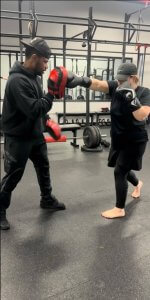
Meet Junaid Gilliam, a Black non-Jewish personal fitness trainer and strength coach whose client list includes many women in the Orthodox community of the Five Towns on Long Island. Through his work, he has built close professional — and often deeply personal — relationships with a wide range of Orthodox Jewish clients and their families. In the process, he has developed a genuine appreciation for the community and its values.
If you spend time on Gilliam’s Instagram page (and we encourage you to!), you’ll see workout videos, snippets of his family life, gym humor, and clips of clients pushing themselves through challenging exercises. But you’ll also notice something else: references to niche Jewish concepts like sheitels (wigs) and shalom bayis (family harmony), along with footage from Orthodox Jewish weddings and celebrations he’s been invited to attend.

It’s clear that this non-Jewish trainer has become part of the lives of many of the people he works with, and perhaps even more meaningful, has gained an understanding of traditions that might seem unfamiliar to outsiders.
Gilliam didn’t originally set out to work in the Orthodox community. The connection happened organically after one client began recommending him to friends. Over time, word spread, his client base grew, and so did his knowledge and understanding of Orthodox Judaism.
What surprised him most wasn’t the growth of his business, but the relationships that developed along the way. “They embraced me the same exact way as my other non-Jewish clients,” he said. “It was very wholesome to experience that.” Over time, those relationships expanded far beyond the gym. Clients invited him to weddings, brises, and holiday celebrations. They took him out to dinner for his birthday and even welcomed him and his wife into their homes—and Sukkahs!—for Jewish holidays.
Through those experiences, Gilliam says he began to realize how much common ground existed beneath the surface. “You realize we’re much more alike than we are different,” he said.A Jewish teaching from the Talmud, “L’fum tzara agra” — according to the struggle is the reward — resonates with Gilliam. It reminds him of a quote from a leader from his community, Frederick Douglass who famously said: “If there is no struggle, there is no progress.”
At first, he admits, the unfamiliarity of the Orthodox Jewish community felt intimidating simply because it was new, but as he got to know his clients better, what stood out most were the values he saw reflected in their lives. The discipline, structure, and commitment he saw in their religious observance mirrored the same qualities he emphasizes with clients pursuing fitness goals. “If you’re disciplined, if you’re consistent, if your mindset is like that, you’ll have results in the gym but also in life,” he said.
In a world where people often form opinions about entire groups from afar, his experience inside the Orthodox community led him to a simple but powerful conclusion. “Prejudices come from distance,” he said. “But not from real interaction.”
 When people break out of their bubbles — sharing experiences and learning about one another’s lives — the assumptions that once felt solid begin to dissolve. “When you actually get to sit with people and spend time with them, you realize that you’re much more alike than you are different,” he said. Gilliam believes those kinds of encounters are exactly what society needs more of.
“It’s more important to have a conversation with somebody that you may have different backgrounds and upbringings with,” he explained. “Those are the important conversations that need to be had.”
That perspective also shapes how Gilliam responds to moments of tension between communities, including instances of antisemitism. As a Black man, he is no stranger to prejudice himself, and lets his clients know that as they experience rising hatred from the world, that he understands the pain on a personal level and has their back. He also doesn’t shy away from calling out harmful behavior, even when it comes from within his own community.
His mother instilled in him a strong sense of responsibility to be a positive example, not just for himself but for the broader community he represents, not so different from the Jewish message of kiddush Hashem that many Orthodox Jewish parents instruct their children about, to be good representatives of the community to the world. That mindset has stayed with him, guiding how he shows up in the world and how he chooses to build bridges rather than reinforce division.
Through his client work, Gilliam has also helped challenge another common stereotype: the way Orthodox Jewish women are often portrayed. On his social media page, many of his clients appear lifting weights, performing pull-ups, and pushing themselves through demanding workouts. Some wear tichels (scarves), baseball caps, or wigs — details he sometimes even points out in his videos. The image is striking precisely because it is so rarely seen. 
The reaction that struck him most didn’t come from the Jewish community, but from his own wife. “My wife said, ‘You never see that,’” Gilliam recalled. “She said it was empowering to see women who don’t look exactly like her getting strong in the gym.” The visibility mattered. “She said she was glad the world gets to see this,” he said. “Because sometimes people might assume that Jewish women don’t even train like that.” Common misconceptions perpetuated about Orthodox Jewish women is that they are meek and weak.
True understanding, he believes, only happens when people are ready to make themselves vulnerable and willing to learn from others. “I believe God wants us to grow and growth happens when you step outside of your comfort zone,” he said. It’s a lesson he often compares to the gym itself. “When you lift heavier weights or do moves that challenge you, that’s when progress happens.”
And sometimes, that growth begins with something as simple as walking into a room where you don’t quite know what to expect and discovering that you’re more welcome, and have more in common, than you ever could have imagined.
If you found this content meaningful and want to help further our mission through our Keter, Makom, and Tikun branches, please consider becoming a Change Maker today.

 Related posts